
AI can help turn a crowded or vague résumé into concise, readable language—but it cannot establish whether you worked at a company, completed a certification, or achieved a particular result. The best use of AI is to improve how accurately your experience is presented, not to make your experience sound bigger than it was.
This guide shows a step-by-step approach for United States job seekers: identify relevant skills in a real job posting, gather evidence about work you actually performed, rewrite bullets with an AI assistant, and check the finished résumé for accuracy and readability. It includes a copy-ready prompt, a worked fictional example, a before-and-after checklist, and a separate note for federal applications.
Step 1: read the job posting before editing
Open the employer’s current job announcement. Highlight the main duties, required qualifications, and tools or skills that genuinely match your background. If you apply to several roles, keep a verified master record of your experience and adapt which truthful details you emphasize for each posting.
- Find the core work: What three responsibilities will this employee spend time doing?
- Separate required from preferred: Do not portray a preferred skill as your own if you have not used it.
- Identify recognizable terms: Use terminology from the posting only when it accurately describes your real tasks.
- Check the application instructions: Confirm file type, page length, documents, and any employer-specific questions.
The U.S. Department of Labor’s CareerOneStop résumé guide recommends emphasizing relevant responsibilities and accomplishments, using specifics rather than generic claims, and drawing appropriate terms from the job posting. It does not tell applicants to invent qualifications.
Step 2: make an evidence bank before writing bullets
Make a private table of the work you did, who was involved, which tools you used, and what changed as a result. Keep information you can substantiate separate from details you cannot remember. For a career change, a student project or volunteer experience can demonstrate transferable skills when it is labeled accurately.
| What to record | Questions to answer honestly |
|---|---|
| Role and dates | What was your real title? Which employer or organization? What dates can you check? |
| Responsibility | What specifically was assigned to you? What belonged to the team? |
| Action | Which steps did you personally complete? Which systems did you actually use? |
| Outcome | What result was observed? Is there a report, feedback, or verifiable record? |
| Unknown | Which metrics, dates, job titles, or outcomes must stay unverified? |
You do not need a percentage or dollar amount in every bullet. Numbers can make evidence concrete when they are true and supported; a precise-looking figure that you cannot verify is worse than a clear description of an actual contribution.
Step 3: prepare a safe, redacted AI input
Avoid pasting an entire résumé containing your full address, phone number, private email, references, employee IDs, client data, salary records, or confidential employer details into a consumer AI chat without first reviewing the tool’s privacy controls and organizational policy. You can improve a bullet by giving a public job-posting excerpt and a sanitized description of the tasks you performed.
Never ask AI to “fill in missing work history” or “make the results more impressive.” Ask it to flag gaps. Keep the final employer names, dates, schools, licenses, and credentials under your control.
Step 4: use a prompt that protects the truth
Copy the following prompt and replace the bracketed parts with non-sensitive, verified information. Ask for plain language and keep only wording that accurately describes your experience.
Act as a careful resume editor, not a career-history writer.

Target job: [role title]
Public job-posting duties: [selected relevant details]

MY VERIFIED BACKGROUND
Real role or project: [name and dates you can verify]
Tasks I personally performed: [facts]
Tools I actually used: [facts]
Observed results: [facts, or "not measured"]
Transferable skills: [facts]
Unknown or unverified details: [list]

Write five concise resume-bullet options that:
- Match the role's relevant duties only when supported
- Begin with a clear, accurate action verb
- Show my personal contribution, context, and result
- Use no invented employers, tools, qualifications, dates,
  customers, metrics, promotions, or certifications
- Say "not verified" when evidence is missing
- Avoid keyword stuffing or exaggerated claims

For each bullet, provide:
1. The proposed wording
2. Which supplied fact supports it
3. Anything I must check before using it

Do not claim the draft will pass an applicant tracking
system or guarantee an interview.
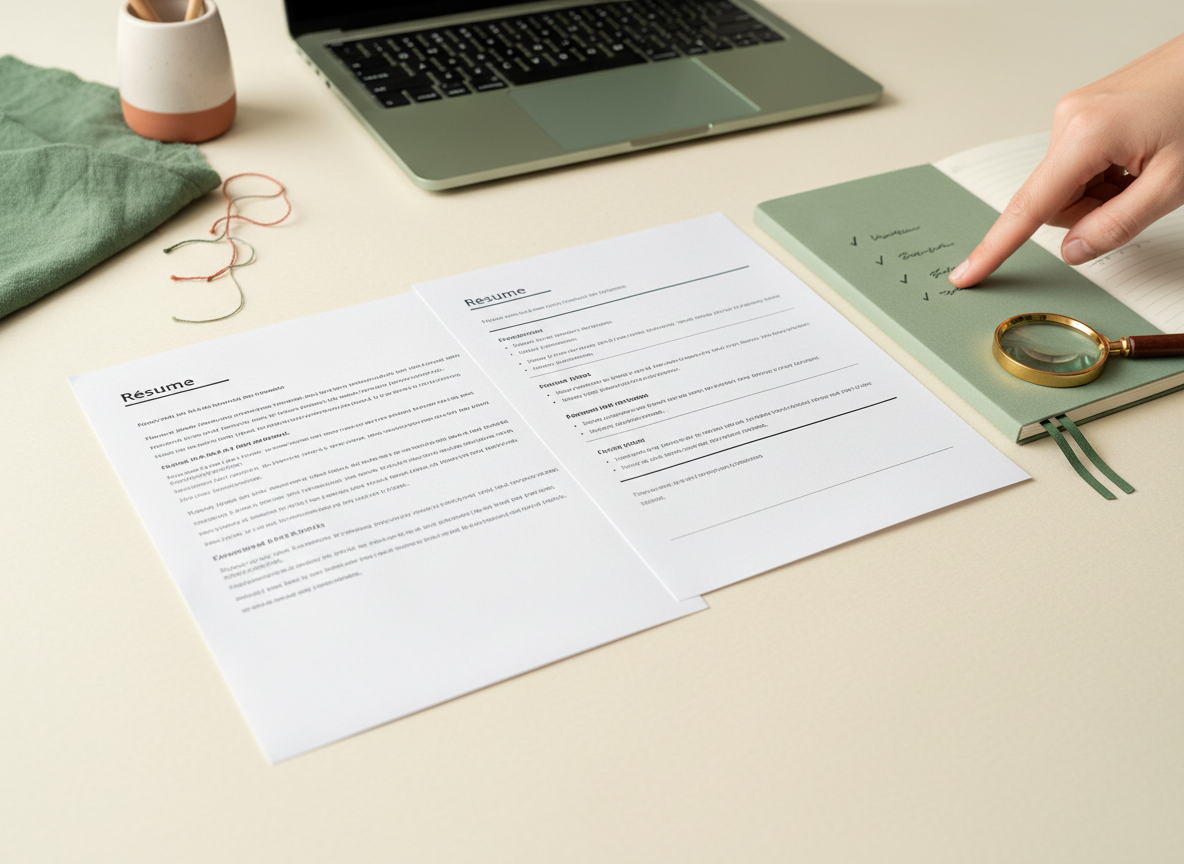
REWRITE THE LANGUAGE. KEEP THE FACTS.
Illustration: Check every action, responsibility, metric, and claim against your own record.
Step 5: compare a weak bullet with a truthful revision
Fictional teaching example: A student volunteer at a neighborhood community event helped coordinate volunteers and update a shared schedule. The student kept an attendance list and answered volunteer questions but did not have a management title or measure hours saved. No actual résumé or employer was tested for this guide.
| Version | Example wording |
|---|---|
| Vague original | “Helped out with events.” |
| Useful truthful revision | “Updated a shared volunteer schedule and answered event-day questions to help the team follow a consistent plan.” |
| Misleading AI embellishment to reject | “Directed a 25-person operations team and increased event productivity by 40%.” |
The truthful version says what the person did and why it mattered without claiming an unverified scale of impact. If there really were 25 volunteers and a verifiable measurement, those details could be reviewed for inclusion. In this example neither is established, so they must not be added.
Step 6: check formatting for human readers and screening tools
Make the résumé easy to scan without depending on clever formatting. CareerOneStop’s formatting guide recommends familiar section labels such as Work Experience, Education, and Skills; consistent spacing; and a layout that does not hide important text inside images or complex formatting. Some application systems may misread multi-column layouts or information placed in headers and footers.
- Headings: Use plain labels so readers can find your work history, education, and relevant skills.
- Structure: Keep roles, organizations, and dates consistent and easy to locate.
- Bullets: Prioritize the specific contributions that match the job, rather than duplicating every task you did.
- File format: Submit only a format the application actually accepts, and preview the uploaded version.
- Automated screening: Do not promise an “ATS score,” guaranteed ranking, or a universal résumé format. Check the employer’s instructions.
Read the document on a phone or laptop before applying. Confirm that dates have not moved beside the wrong job, bullets have not become ambiguous, and any links are intentional and appropriate. If a résumé parser shows an extracted preview, compare it with your original.
Important distinction: private-sector résumés vs. USAJOBS
A résumé for a U.S. federal government position may have specific requirements that are different from a typical private-sector application. As of this guide’s source check, the official USAJOBS guidance states that federal agencies accept résumés up to two pages under the Merit Hiring Plan. The job announcement controls the qualifications, required details, documents, and instructions for that opening.
Read the full USAJOBS announcement before using AI to rewrite anything. A clear one-page private-sector template is not evidence that it contains the specialized experience information a federal reviewer needs. Conversely, requirements for a particular federal application should not be assumed to apply to every private employer.
Step 7: run a claim-by-claim final audit
Use this review before sending a résumé or posting it publicly. For high-stakes claims, comparing every line with your master work record is more reliable than another AI rewrite.
- Identity and dates: Are employer names, role titles, education, and dates correct?
- Personal action: Does each bullet describe work you personally performed?
- Results: Can you support every number, percentage, customer count, and outcome?
- Credentials: Are licenses, certifications, and degrees accurate and current?
- Relevance: Does the wording actually reflect qualifications required by the job posting?
- Privacy: Did you avoid sharing information with AI tools you were not permitted to disclose?
- Format: Does the final uploaded document look and read correctly?
If you find a questionable claim, mark it for correction. A reader-friendly, well-supported résumé is more useful than a document that tries to impress through artificial specificity.
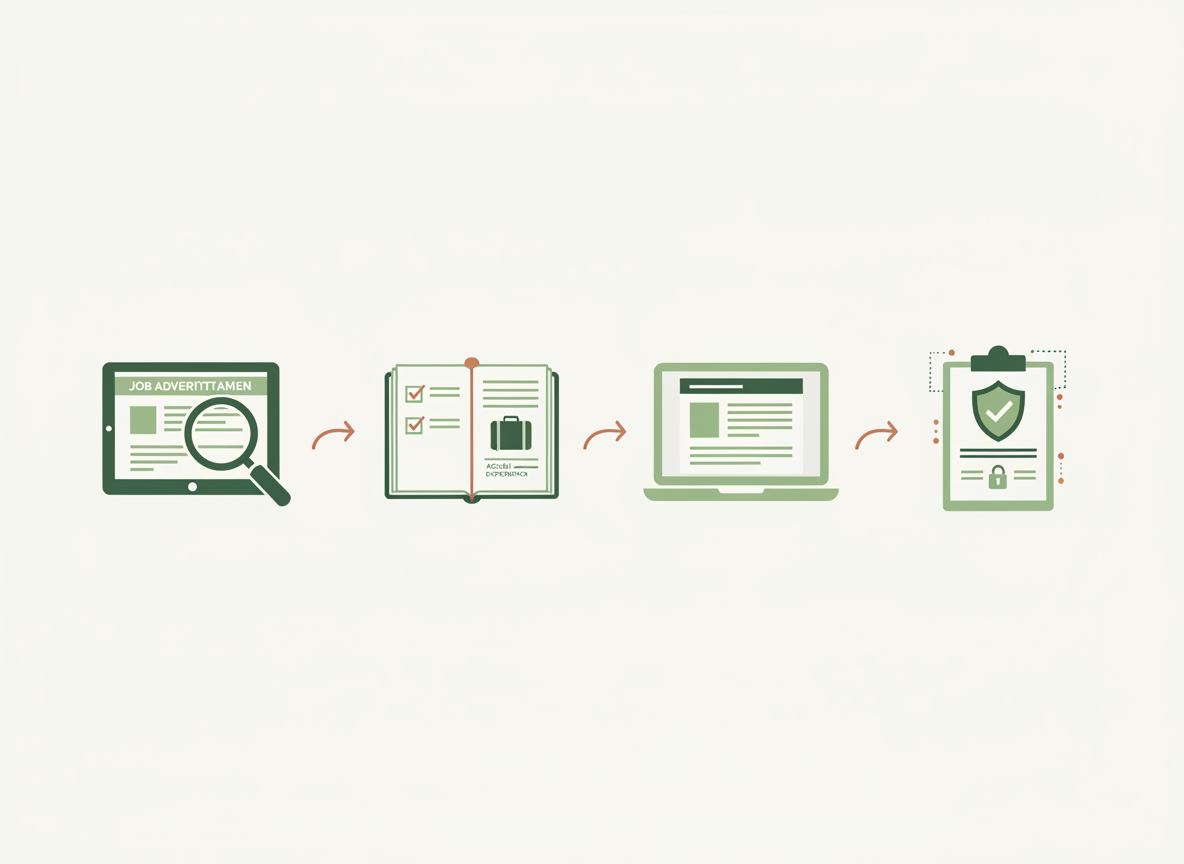
READ → COLLECT → EDIT → VERIFY
Illustration: Use AI to organize real evidence, and review the final résumé yourself.
A practical 20-minute résumé editing session
| Time | Action |
|---|---|
| 0–4 minutes | Choose a current role and highlight three relevant responsibilities. |
| 4–8 minutes | List verified experiences and mark missing details as unknown. |
| 8–13 minutes | Ask AI for a few supported bullet alternatives. |
| 13–17 minutes | Compare each draft line with your own records and remove unsupported claims. |
| 17–20 minutes | Review the document layout and decide what still needs a human check. |
This is an illustrative planning exercise, not a measured outcome or evidence that twenty minutes is sufficient for every applicant. Complex or specialized roles may require much longer research and tailoring.
Protect yourself from fake recruiters and sensitive-data requests
A résumé is a professional introduction, not an excuse for an unfamiliar recruiter to demand bank details or identity numbers. The Federal Trade Commission warns about fake job offers and recruiters who try to obtain personal financial information. Verify an employer through independently found official contact channels if a message seems suspicious, and do not send money to secure a job offer.
Frequently asked questions
Can AI make my résumé pass an applicant tracking system?
AI can help make writing clearer and compare descriptions with requirements. It cannot guarantee that a particular employer’s software, reviewer, or hiring process will rate a résumé well. Avoid services promising universal ATS scores or certain interviews.
Should I use numbers even if I don’t know the result?
No. Ask what you can substantiate. If you never measured the improvement, write a truthful qualitative contribution instead of guessing a percentage.
Can I apply with only volunteer or school experience?
You can describe relevant education, volunteering, class projects, and transferable skills accurately. Label them clearly rather than presenting them as paid professional employment.
Are federal résumés always just two pages now?
USAJOBS currently states a two-page limit for federal résumés, but always confirm the requirements and documents listed in the specific announcement. Do not rely on older articles or assume an unrelated employer has the same rules.
Next application step: After reviewing your résumé, use our AI cover-letter writing guide to explain why your verified experience matches the role. The cover letter and résumé should agree on every job, date, responsibility, and achievement.
Official references and next practical guides
- CareerOneStop: Work experience in a résumé — relevant duties, accomplishments, dates, and clear evidence.
- CareerOneStop: Résumé formatting — readable layout and common section labels.
- USAJOBS: Writing a federal résumé — federal job announcements, qualifications, and current length requirements.
- FTC: Spotting fake recruiters and job scams — protect personal information.
- Practice job interviews with AI using honest experience stories — rehearse the claims you can actually support.
- Write a professional work email with AI — prepare a clear, truthful application follow-up.
Official references checked October 9, 2026. The event volunteer, résumé bullet points, and timings are fictional teaching examples, not observed employment outcomes. Images are illustrative AI creations, not screenshots of tested résumé software. This article offers general job-search education, not guaranteed interviews, hiring outcomes, professional legal advice, or an applicant tracking system ranking.
Leave a Reply